Learning and Development

Early Years Foundation Stage

The Montessori curriculum encompasses the seven Areas of Learning and Development identified in the compulsory and revised 2021 Early Years Foundation Stage (EYFS).

The EYFS defines expectations in children’s learning and development by the end of the reception year, i.e. at the end of a child’s first year in formal education. There are seven specified areas of learning and development, all of which are inter-related and self-reinforcing.

Of these three are defined as crucial – Communication & Language; Personal, Social and Emotional Development; and Physical Development.

The remaining four specific areas which strengthen the three prime areas are – Literacy; Numeracy; Understanding the world; and Expressive Art & Design.

Listening, Attention and Understanding

Children at the expected level of development will:

  • Listen attentively and respond to what they hear with relevant questions, comments and actions when being read to and during whole class discussions and small group interactions
  • Make comments about what they have heard and ask questions to clarify their understanding
  • Hold conversation when engaged in back-and-forth exchanges with their teacher and peers
Speaking

Children at the expected level of development will:

  • Participate in small group, class and one-to-one discussions, offering their own ideas, using recently introduced vocabulary
  • Offer explanations for why things might happen, making use of recently introduced vocabulary from stories, non-fiction, rhymes and poems when appropriate
  • Express their ideas and feelings about their experiences using full sentences, including use of past, present and future tenses and making use of conjunctions, with modelling and support from their teacher.
Self-Regulation

Children at the expected level of development will:

  • Show an understanding of their own feelings and those of others, and begin to regulate their behaviour accordingly;
  • Set and work towards simple goals, being able to wait for what they want and control their immediate impulses when appropriate;
  • Give focused attention to what the teacher says, responding appropriately even when engaged in activity, and show an ability to follow instructions involving several ideas or actions.
Managing Self

Children at the expected level of development will:

  • Be confident to try new activities and show independence, resilience and perseverance in the face of challenge;
  • Explain the reasons for rules, know right from wrong and try to behave accordingly;
  • Manage their own basic hygiene and personal needs, including dressing, going to the toilet and understanding the importance of healthy food choices.
Building Relationships

Children at the expected level of development will:

  • Work and play cooperatively and take turns with others;
  • Form positive attachments to adults and friendships with peers;
  • Show sensitivity to their own and to others’ needs.
Gross Motor Skills

Children at the expected level of development will:

  • Show an understanding of their own feelings and those of others, and begin to regulate their behaviour accordingly
  • Set and work towards simple goals, being able to wait for what they want and control their immediate impulses when appropriate
  • Give focused attention to what the teacher says, responding appropriately even when engaged in activity, and show an ability to follow instructions involving several ideas or actions.
Fine Motor Skills

Children at the expected level of development will:

  • Be confident to try new activities and show independence, resilience and perseverance in the face of challenge
  • Explain the reasons for rules, know right from wrong and try to behave accordingly
  • Manage their own basic hygiene and personal needs, including dressing, going to the toilet and understanding the importance of healthy food choices
Comprehension

Children at the expected level of development will:

  • Demonstrate understanding of what has been read to them by retelling stories and narratives using their own words and recently introduced vocabulary
  • Anticipate – where appropriate – key events in stories
  • Use and understand recently introduced vocabulary during discussions about stories, non-fiction, rhymes and poems and during role-play
Word Reading

Children at the expected level of development will:

  • Say a sound for each letter in the alphabet and at least 10 digraphs
  • Read words consistent with their phonic knowledge by sound-blending
  • Read aloud simple sentences and books that are consistent with their phonic knowledge, including some common exception words
Writing

Children at the expected level of development will:

  • Write recognisable letters, most of which are correctly formed
  • Spell words by identifying sounds in them and representing the sounds with a letter or letters
  • Write simple phrases and sentences that can be read by others
Number

Children at the expected level of development will:

  • Have a deep understanding of number to 10, including the composition of each number
  • Subitise (recognise quantities without counting) up to 5
  • Automatically recall (without reference to rhymes, counting or other aids) number bonds up to 5 (including subtraction facts) and some number bonds to 10, including double facts
Numerical Patterns

Children at the expected level of development will:

  • Verbally count beyond 20, recognising the pattern of the counting system;
  • Compare quantities up to 10 in different contexts, recognising when one quantity is greater than, less than or the same as the other quantity
  • Explore and represent patterns within numbers up to 10, including evens and odds, double facts and how quantities can be distributed equally
Past and Present

Children at the expected level of development will:

  • Talk about the lives of the people around them and their roles in society
  • Know some similarities and differences between things in the past and now, drawing on their experiences and what has been read in class
  • Understand the past through settings, characters and events encountered in books read in class and storytelling
People, Culture and Communities

Children at the expected level of development will:

  • Describe their immediate environment using knowledge from observation, discussion, stories, non-fiction texts and maps
  • Know some similarities and differences between different religious and cultural communities in this country, drawing on their experiences and what has been read in class
  • Explain some similarities and differences between life in this country and life in other countries, drawing on knowledge from stories, non-fiction texts and – when appropriate – maps
The Natural World

Children at the expected level of development will:

  • Explore the natural world around them, making observations and drawing pictures of animals and plants
  • Know some similarities and differences between the natural world around them and contrasting environments, drawing on their experiences and what has been read in class
  • Understand some important processes and changes in the natural world around them, including the seasons and changing states of matter
Creating with Materials

Children at the expected level of development will:

  • Safely use and explore a variety of materials, tools and techniques, experimenting with colour, design, texture, form and function
  • Share their creations, explaining the process they have used
  • Make use of props and materials when role playing characters in narratives and stories
Being Imaginative and Expressive

Children at the expected level of development will:

  • Invent, adapt and recount narratives and stories with peers and their teacher
  • Sing a range of well-known nursery rhymes and songs
  • Perform songs, rhymes, poems and stories with others, and – when appropriate – try to move in time with music

Montessori Areas of Learning

We deliver the EYFS through the Montessori curriculum. The five key areas of learning in the Montessori classroom are Practical Life, Sensorial, Literacy, Mathematics, and Culture.

In addition, creativity (art and music) is encouraged across all curriculum areas.

Practical Life

Practical life includes life skills to help develop independence, coordination, concentration, self-control, self-awareness, confidence and include:

  • Care of Self (food preparation, dressing, washing).
  • Care of Environment (cleaning, gardening, care of pets, environmentalism).
  • Grace and Courtesy (greetings, manners, social interactions).
  • Control of Movement (refining movements, walking the line, moving quietly).

Sensorial

Sensorial activities allow the child to refine each of their senses:

  • Sight (visual)
  • Touch (tactile)
  • Smell (olfactory)
  • Taste (gustatory
  • Sound (auditory)
  • Stereognostic (kinaesthetic)

Includes the manipulation of specifically designed materials that isolate qualities. Refines fine motor skills, visual and auditory senses and develops coordination and the ability to order and classify. Materials include the Pink Tower, Brown Stairs, Knobbed Cylinders and Colour Tablets.

Literacy

Literacy is based on phonetic awareness. Children work through specific hands-on and tactile language materials such as the Sandpaper Letters to the Moveable Alphabet. Literacy is not an isolated topic but runs through the curriculum. The spoken language is the foundation for writing and then reading.

Mathematics

Mathematics is developed with the use of concrete learning materials. The sensorial area is the preparation for mathematics. Hands-on materials are used such as Number Rods, Sandpaper Numbers, Number Boards, Spindle Box, Number Tiles and Beads. Each exercise builds upon another and the child gradually moves to from concrete to abstract areas such as place value, addition, subtraction, multiplication, and fractions.

Culture

Culture allows the child to explore the natural world around them and includes:

  • Geography (continents, landforms, earth layers, solar system).
  • Zoology (classification, physiology of animals).
  • Botany  (ecology, classification, physiology of plants).
  • History (time lines, using a calendar)
  • Science.

The cultural area is clearly identifiable by globes, puzzle maps, flags and perhaps images or materials from other cultures.

Structure of each session

The children freely select activities from the shelves in the classroom. When children first start at the nursery, these focus on the practical life activities such as pouring, threading and sorting. The teacher then introduces the child to each new activity allowing them to progress to working independently.

In the classroom, there are small world activities, a creative area, jigsaws and a book corner complementing the Montessori materials. Children are encouraged to choose activities they enjoy but also to experience things that are new and unfamiliar to them. A child needs gentle encouragement and support and positive reinforcement to learn and discover new experiences. The teacher supports each child as they explore their environment.   In the different activities, each child works both individually and in a group situation so as to promote teamwork and foster social skills.

Daily Registration

Registration is from 9.00am.  The door will not be opened before these times to ensure all the necessary safety checks have been carried out.  All children self-register on arrival and a member of staff also marks them in on the register. Once a child has been handed over to a parent at the end of the session they resume responsibility for them.

Leaving your child for the first time

The initial separation for both the child and the parent can be difficult. We understand this and want to ensure it can happen as smoothly as possible. New children are invited to attend a settling-in visit before they join during which their parents will be present. On joining, gentle encouragement and patience are important; the needs of each individual situation determine the best approach to take. Parents are asked to stay nearby initially but we encourage separation so that the child can explore and settle into their new school environment.

Additional Services

‘The following enrichment opportunities are offered to children in their final year with us before starting school. Each is a ten-week programme in either the Autumn, Spring or Summer Term. There is a small extra charge associated with these opportunities.

Outdoor Learning

Forest School sessions are led by a fully qualified Forest School Leader. Each Forest School session gives children the opportunity to learn a new skill linked to the survival of man and caring for the environment.

Activities include art hunt, mud men, colour matching, camp fires, alphabet trail, map stick and shelter building.

The activities reinforce knowledge learnt in the classroom and offer our children opportunities to develop confidence and self-esteem, and to experience a natural outdoor environment.

Our Forest School helps to develop:

  • Confidence and self esteem
  • Communication and social skills
  • Greater understanding and awareness of the natural environment
  • Physical skills
  • Natural motivation and a positive attitude to learning
  • Creativity and imagination
  • Team skills
  • The ability to recognise and manage everyday risk
  • Healthier lifestyles

Sports Lessons

Our sports programme is run by Key Sports. These sessions will help to equip the children for their upcoming PE lessons at school through mini-sport games and activities that promote confidence, social skills and listening skills. Hand-eye coordination, balance and agility are developed as well as inspiring young children to be excited about being active through exercise to develop a fit and healthy lifestyle.

Piano Lessons

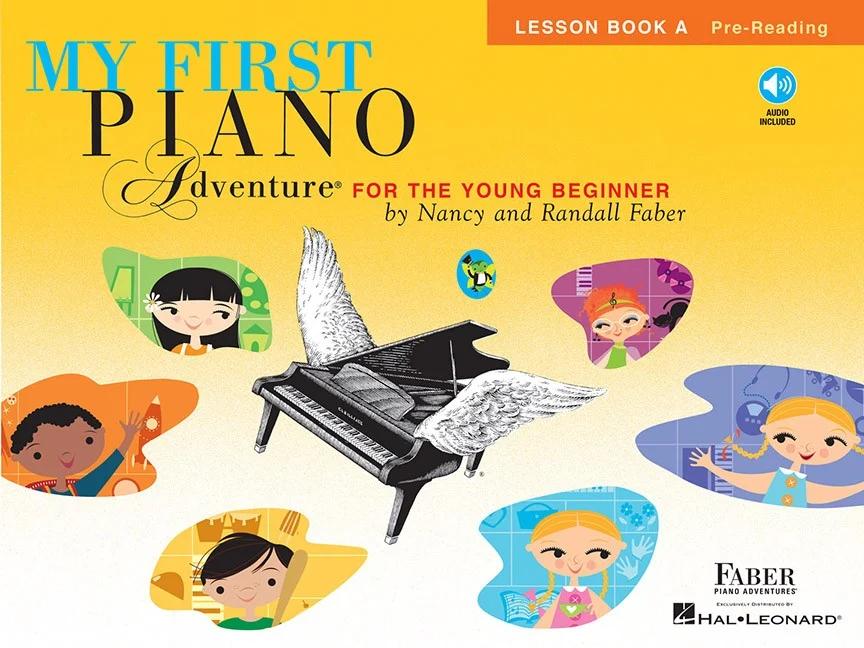
Individual piano lessons are taught by Miss Claire, who has over 25 years’ experience teaching piano. We have a brand new Casio keyboard to use and each child will work through the ‘My First Piano Adventures’ pre-reading and pre-writing books at their own pace.